Narrative that Gen Z is entirely “against” AI is a bit of a paradox. On one hand, Gen Z uses generative AI tools like ChatGPT, Claude, and DeepSeek at higher rates than any other generation for school, casual coding, and brainstorming.
On the other hand, Gen Z expresses the deepest existential anxiety, skepticism, and frustration toward AI’s integration into society.
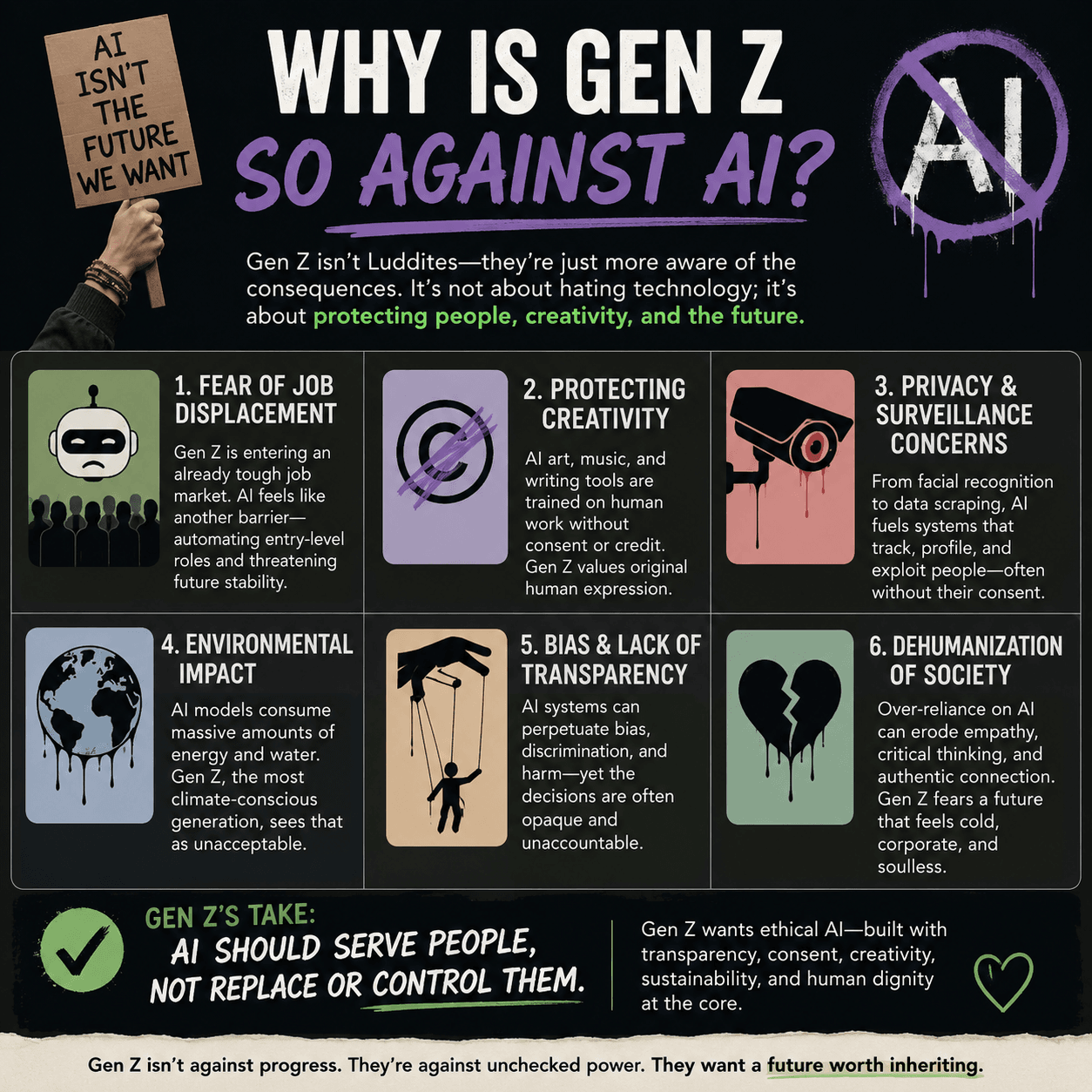
This resistance isn’t a fear of technology itself—Gen Z is the first digitally native generation. Instead, their pushback is a highly rational response to how AI impacts their economic survival, career entry points, and the cultural landscape they inherited.
The Structural Summary: Gen Z isn’t anti-technology; they are anti-exploitation. They will gladly use a local AI model to debug their personal coding project or format a spreadsheet. What they oppose is an unregulated AI boom that devalues human labor, destroys creative industries, and makes landing a stable, entry-level job harder than ever before.
1. The Entry-Level Job Market Wipeout
The biggest driver of Gen Z’s frustration with AI is pure economic survival. Gen Z is entering the workforce at a time when companies are aggressively deploying AI to automate the exact tasks that historically formed entry-level jobs.
[ Traditional Career Ladder ]
Director ──► Manager ──► Junior Staff ──► Entry-Level / Intern (Automated by AI)
Tasks like drafting basic copy, cleaning data spreadsheets, writing introductory code blocks, transcribing video, and basic graphic layout used to be how a recent college graduate got their foot in the door. With AI absorbing these baseline tasks, corporate job openings for juniors have tightened dramatically. Gen Z feels that AI is pulling the bottom rungs off the career ladder just as they are trying to climb it.
2. The Devaluation of Human Creativity and “Brain Slop.”
Gen Z has grown up in a digital ecosystem increasingly flooded with algorithmically generated content, leading to a strong cultural backlash against what internet culture calls “AI Slop.”
- Protecting Artists: Gen Z has been at the forefront of online movements defending digital artists, voice actors, and writers. They widely view generative image and text models as plagiarism engines that were trained on human copyright without consent, compensation, or credit.
- The Craving for Authenticity: Having spent their formative years isolated behind screens during the pandemic, Gen Z places an incredibly high premium on raw, unpolished, human authenticity. They value creators who show their mistakes over flawless, sterile, AI-generated imagery or synthesized music, which they often perceive as hollow and corporate.
3. The Coping Mechanism vs. The Corporate Goal
There is a massive divide between how Gen Z wants to use AI versus how corporate structures are forcing it upon them.
- The Gen Z Ideal: They view AI as a tactical labor-saving tool. If an AI can summarize a long corporate PDF or format a messy piece of code, great—that saves them time so they can focus on strategic thinking or log off early to enjoy their life.
- The Corporate Reality: Gen Z realizes that when management deploys AI, the goal is rarely to give employees a better work-life balance. Instead, it is used to justify layoffs, freeze hiring, or demand that a single human employee do the work of three people by “leveraging AI tools.” They resent AI being used as a corporate whip to accelerate productivity metrics.
4. Algorithmic Fatigue and the Loss of “The Old Internet.”
Gen Z is old enough to remember an internet built by individual humans (early blogs, niche forums, organic social media) but young enough to have watched it get entirely cannibalized by algorithms, hyper-targeted feeds, and automated bots.
They are hyper-aware of data privacy, surveillance capitalism, and the mental health tolls of algorithmic manipulation. To many in this generation, the rapid, unchecked integration of AI into search engines, social feeds, and operating systems feels like the final death blow to a human-centric internet.