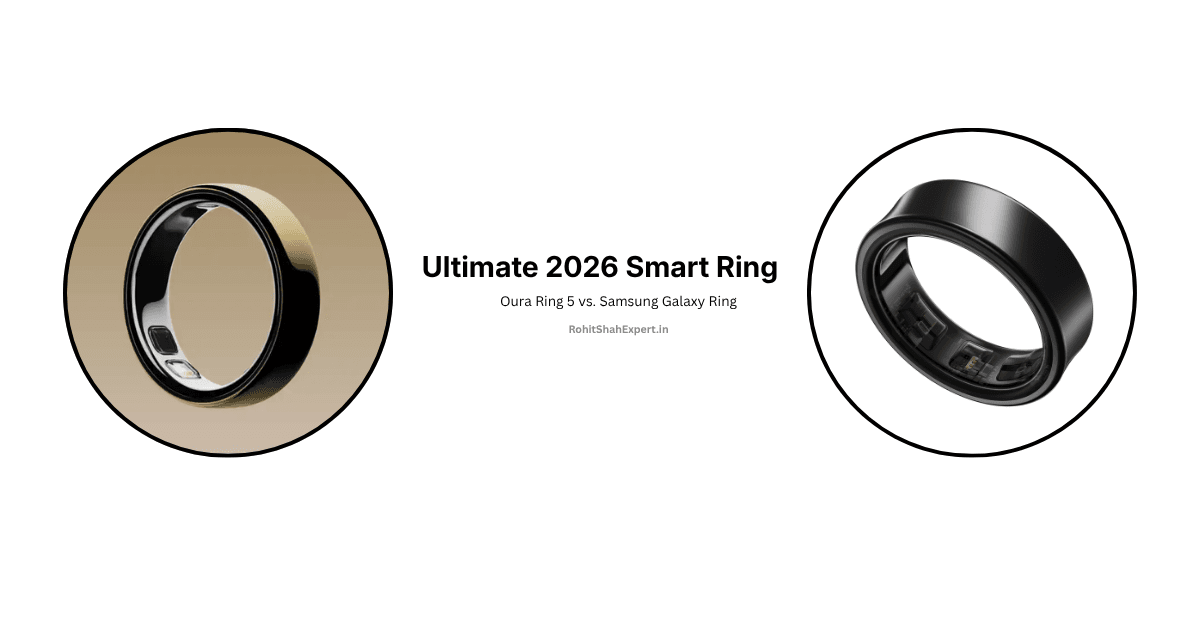
The smart ring market has officially entered its most competitive era. For years, Oura reigned as the undisputed pioneer of finger-based biometrics, but tech giants have aggressively forced their way into the space. With the fresh global rollout of the Oura Ring 5, the ultimate head-to-head matchup centers on how Oura’s highly engineered hardware stacks up against Samsung’s premium ecosystem play, the Samsung Galaxy Ring.
If you are trying to decide which premium smart ring deserves a spot on your finger, this direct architectural and functional comparison lays out the definitive differences.
The Spec Sheet: Oura Ring 5 vs. Samsung Galaxy Ring
| Feature / Specification | Oura Ring 5 (New Release) | Samsung Galaxy Ring |
|---|---|---|
| Starting Retail Price | $399 | $399 |
| Monthly Subscription | $5.99 / month (Required for detailed data) | $0 / Free (No subscription required) |
| Width | 6.0 mm (Ultra-narrow) | 7.0 mm |
| Thickness | 2.28 mm (Ultra-thin) | 2.6 mm |
| Weight | From 2.0 grams | 2.3 to 3.0 grams |
| Exterior Design | Perfectly smooth, classic metallic band | Concave “sunken” profile (scratch-minimizing) |
| Biometric Framework | 12 Signal Pathways + Recessed Inner Sensors | 3 Sensors (PPG, Accelerometer, Skin Temp) |
| Battery Lifespan | Up to 6 to 9 days | Up to 7 days |
| Charging Ecosystem | Desktop dock (Included) / $99 Aluminum Case | Clamshell Charging Case (Included) |
| Ecosystem Ecosystem | Independent (iOS & Android feature-parity) | Strictly Android (Best features locked to Samsung) |
1. Design & Wearability: The Engineering Showdown
The immediate physical battleground is size. The Oura Ring 5 represents a staggering miniaturization milestone, dropping its overall volume by 40% compared to its predecessor. Shaving the width down to an incredibly narrow 6.0 mm and the thickness down to 2.28 mm, the Gen 5 feels completely identical to a standard, non-tech wedding band.
Samsung takes an entirely different aesthetic approach. The Galaxy Ring features a unique concave (curved inward) outer shell. While it is slightly wider (7.0 mm) and thicker (2.6 mm) than the ultra-thin Oura 5, that concave dip structurally prevents the outer titanium from scraping against surfaces, making it incredibly resilient against everyday micro-scratches.
Additionally, look at the charging structures. Samsung includes a sleek, translucent plastic clamshell charging case right in the box. Oura bundles a stationary desktop puck, requiring you to pay an extra $99 if you want their premium, anodized aluminum travel battery case.
2. Subscription Fees: The Hidden Lifetime Cost
This is the absolute biggest fork in the road for your wallet.
- The Oura Ecosystem: To view anything beyond three baseline daily scores (Sleep, Readiness, and Activity), Oura mandates a $5.99/month ($69.99/year) recurring membership. Over a three-year ownership cycle, an Oura Ring 5 actually costs roughly $610.
- The Samsung Ecosystem: Samsung completely rejects the paywall model. Every deep biometric data metric, AI-generated energy score, sleep tracking analysis, and wellness insight inside the Samsung Health app is 100% free forever with the purchase of the ring.
3. Sensor Accuracy & Health Metrics
While Samsung saves you money on subscriptions, Oura counters with sheer medical-grade sensor dominance.
The Oura Ring 5 leverages an overhauled interior tracking grid packing 12 independent signal pathways utilizing recessed flat-sensor contact points. This ensures that even if the ring rotates slightly on your finger during deep sleep, the algorithms maintain continuous data mapping. Oura’s new software suite, Health Radar, tracks advanced metrics like overnight Blood Pressure Signals and rolling 30-day Nighttime Breathing patterns to proactively alert you to respiratory issues like sleep apnea.
The Galaxy Ring tracks a highly robust, clean set of vitals (heart rate, skin temperature, sleep cycles, and blood oxygen), which feed into Samsung’s highly intuitive daily Energy Score. However, it relies on a standard three-sensor array that requires a more rigid, continuous placement on the bottom of your finger to avoid data gaps.
4. Ecosystem & Platform Lock-In
- Oura Ring 5 is platform-agnostic. Whether you use an iPhone or an Android device, the Oura app functions identically, delivering the same updates, charts, and metrics across both operating systems.
- The Galaxy Ring is rigidly tied to Android. It does not support iOS whatsoever. Furthermore, its most premium features—such as Galaxy AI Wellness Tips, personalized health summaries, and the highly convenient Double Pinch Gesture (which lets you snap a photo on your phone or dismiss an alarm by tapping your thumb and ring finger together)—are exclusively locked to users paired with a Samsung Galaxy smartphone.
The Verdict: Which Should You Buy?
Buy the Oura Ring 5 if:
You prioritize maximum physical comfort, want a ring that genuinely looks like real jewelry, and require the absolute highest level of granular, medical-grade sleep and cardiovascular health tracking available. If you use an iPhone, this is your only viable choice between the two.
Buy the Samsung Galaxy Ring if:
You are an Android user (especially a Samsung Galaxy device owner) who completely refuses to pay a monthly subscription fee to look at your own health data. The included portable charging case and seamless integration into Samsung Health make it an effortless, economical long-term option.
Frequently asked questions targeting the core differences between the newly released Oura Ring 5 and the Samsung Galaxy Ring
1. Does the Samsung Galaxy Ring require a monthly subscription like the Oura Ring 5?
No. Samsung does not charge a subscription fee. All health metrics, sleep analysis, and AI-generated Energy Scores inside the Samsung Health app are 100% free with the purchase of the ring. Conversely, the Oura Ring 5 requires an ongoing $5.99/month ($69.99/year) membership to access deep data tracking, trends, and advanced features like Health Radar.
2. Can I use the Samsung Galaxy Ring with an iPhone?
No, it is strictly locked to Android. The Galaxy Ring does not support iOS whatsoever. Furthermore, its most unique features—such as personalized Galaxy AI wellness summaries and the “Double Pinch” finger gesture—require a paired Samsung Galaxy smartphone. The Oura Ring 5, however, is fully platform-agnostic and provides identical features and data parity on both iOS and Android.
3. Which smart ring is physically smaller and more comfortable?
The Oura Ring 5 wins on pure thinness and minimalism. Following a massive 40% volume reduction over the previous generation, the Oura 5 is just 2.28 mm thick and 6.0 mm wide, making it feel exactly like a classic, slim wedding band. The Samsung Galaxy Ring is slightly bulkier at 2.6 mm thick and 7.0 mm wide, but it utilizes a unique concave (curved inward) outer shell that does an excellent job of preventing everyday scratches.
4. How do their charging cases and battery lifespans compare?
Samsung Galaxy Ring: Includes a translucent, plastic clamshell travel charging case right in the box, and the ring itself lasts up to 7 days on a single charge.
Oura Ring 5: Delivers an improved 6 to 9 days of battery life, but only includes a standard stationary desktop charging puck. If you want Oura’s premium, anodized aluminum travel case (which holds up to a month of backup power), you have to purchase it separately for $99.